
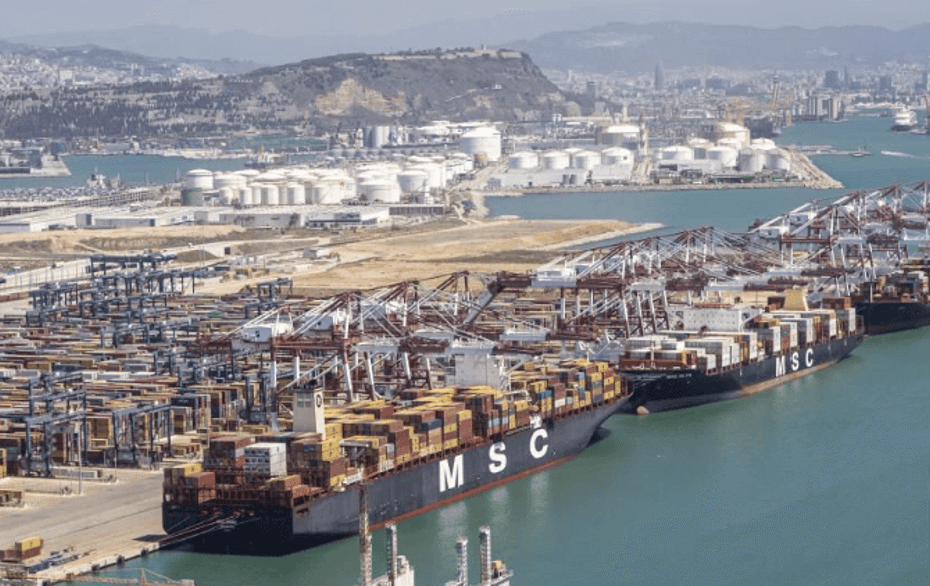
The Port of Barcelona aims to produce 100,000 tonnes of sustainable fuels per year, placing a strong emphasis on biomethane and synthetic fuels, as part of its approved energy transition plan to 2040.
The Spanish maritime hub aims to become an emissions-neutral port by 2050 and halve its emissions by 2030 compared with 2017 levels.
According to a statement, the port will no longer treat energy as a commodity “but as a strategic factor,” key to bolstering the competitiveness of the port and the surrounding area in an increasingly demanding global market.
Its action plan comprises 150 actions, grouped into four main areas: decarbonising port activity; sustainability of energy consumption; resilience to guarantee energy supply and innovation to facilitate the emergence of new business models; and the adoption of emerging technologies.
It notes that biomethane and synthetic fuels are key to decarbonising maritime transport and being able to supply them allows it to be part of maritime green corridors and attract the most efficient and sustainable ships.
Developing the hydrogen economy is another focus, with the connection of the H2MED gas pipeline representing a great opportunity to make the port a hub for sustainable fuel.
The plan also foresees other technologies such as CO2 capture systems and their subsequent use, through the circular economy, for producing synthetic fuels, among other elements.
To transform the port, planned investments in infrastructure totalling around €920m in private funds and €780m in public funds have been identified.
President José Alberto Carbonell said, “The Port has a key role in the energy sector and must act as a strategic node that not only imports, stores and distributes, but also produces and ensures the supply of different sustainable energies.”
The European Commission recently announced a €2.9bn investment for sustainable fuels by 2027.