
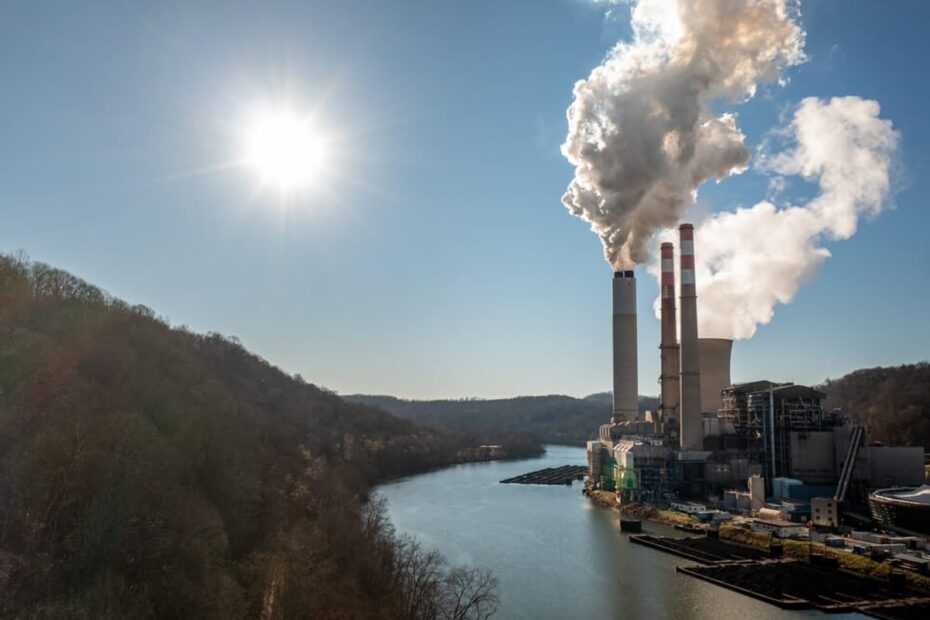
Global carbon dioxide capture capacity at coal-using facilities stands at approximately 10 million tonnes per annum (mtpa), representing just 0.06% of total coal-related emissions, according to a new International Energy Agency (IEA) report.
The volumes underline the challenges in transiting to clean energy and cutting emissions. Last year coal production contributed to 135 million tonnes of CO2 equivalent emissions (CO2e) and global coal demand is on course to rise by 0.5% in 2025, reaching a record 8.85 billion tonnes, according to the IEA.
North America continues to lead in total installed capture capacity, accounting for more than half of the global total.
The region hosts three of the four largest operating projects: the Great Plains synfuel project, with a capacity of 3 Mt CO2 per year; the Petra Nova coal power project, which resumed operations in 2023 and captures 1.4 Mt CO2 annually; and in Canada the Boundary Dam coal power project captures 1 Mt CO2 per year.
China ranks second in total installed capacity, but currently leads in new installations. Between 2024 and 2025, China increased its installed capture capacity by nearly 50%, highlighted by the commissioning of the Huaneng Longdong Energy Base project in September 2025.
This facility, with a capture capacity of 1.5 Mt CO2 per year, is now the world’s largest carbon capture project at a coal-fired power plant. Most operational commercial-scale capture projects (> 100,000 t CO2/year) are located in China, with a combined target capacity of 2.35 Mt CO2/year.
Most projects are in the US (32 Mtpa) and China (17 Mtpa), with power generation as the main use case (38 Mtpa). However, most of this capacity remains at an early stage of development, with only China constructing around 1.4 Mt currently.
“Without significant CCUS deployment, coal’s role in a low-carbon future will be severely constrained,” the report states.
The adoption of hydrogen-based and other innovative steelmaking processes is expected to remain limited because of cost barriers and scrap availability, meaning coke, and coking coal, will continue to play a dominant role, it adds.
The findings mirror recent research from Rystad Energy which forecasts CCUS, bioenergy and hydrogen are set to play only a small part in cleaning up global emissions.
However, with renewable capacity surging, nuclear expanding steadily, and a huge wave of liquefied natural gas coming to market, coal-fired power generation is forecast to decline from 2026 onwards, although coal demand from industry is expected to remain more resilient.
Speaking on a gasworld decarbonisation webinar this year, Gill Scheltjens, CEO at climate tech company D-CRBN, said his company continued to make progress in proving its plasma-based carbon conversion technology at an industrial scale, although, in common with many firms, it has been hampered by unfavourable geopolitical challenges.
Its technology transforms carbon emissions into circular carbon monoxide, a feedstock for chemicals, polymers or e-fuels.
“Despite all these challenges we are aiming for the deployment of spearhead projects,” he said.