
Sustainable fuel pledges from countries attending COP30 in Brazil have increased to 23 countries.
Initially only Brazil, Japan, Italy, and India had signed up to promote clean energy sources, such as hydrogen and its derivatives, biogases, biofuels, and synthetic fuels.
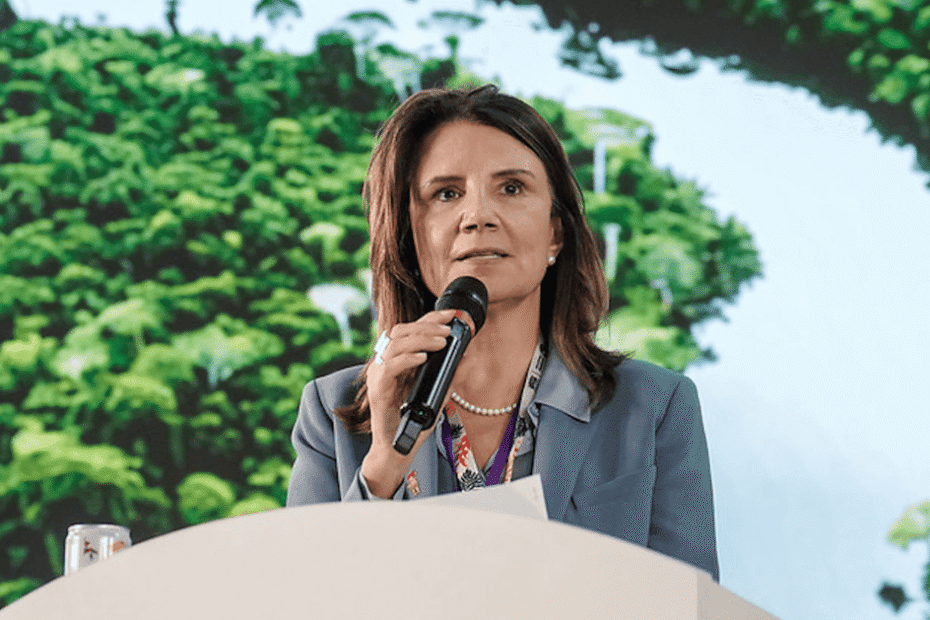
But COP30 CEO Ana Toni said there has now been a strong uptake, with the Belem 4x pledge, coinciding with the energy-focusd days at the annual intergovernmental climate conference.
“It shows that the transition to a low-carbon economy is irreversible,” she said.
Attending Friday’s panel was Alistair Phillips-Davies, Chief Executive of SSE and Co-chair of the Utilities for Net Zero Alliance (UNEZA), with 53 members worked at cutting carbon emissions.
He acknowledged the world is “long on targets but short on delivery,” before highlighting work at Dogger Bank off the coast of the UK – which is not among the new signatories.
“We need much more holistic grid planning, based on the needs of the 2050 energy system,” he said.
A dedicated session was also held on bioenergy. A video highlighted rhw range of companies globally converting agricultural waste to energy and creating circular economies.
Oscar Espinosa, a board member at the World Bioenergy Association, said, “You can see [bioenergy] covers different corners of the world, with very different feedstocks and different solutions, from solid fuels to biomethane and liquid fuels,” he said.
“The Belem 4x pledge … signals a renewed international focus on the role of bioenergy in meeting these climate goals. The world must move from negotiation to implementation, from pledges to projects.”
In a side session, the African Development Bank Group (AfDB) and the Sustainable Energy Fund for Africa (SEFA) ran an event on mobilising commercial capital for energy access in Africa. It was dedicated to accelerating private investment in Africa’s renewable energy and energy access sector.
It explored how SEFA’s newly established Green Hydrogen Programme could help Africa seize this potential. The fund, managed as a multi-donor trust fund managed by the AfDB, will have cumulative approvals totalling over $400m by the end of this year.
The panel had stakeholders from Italy, Germany and Norway, reflecting the importance of international partnerships.
Terje Pilskog, CEO of Norway’s Scatec, said, “These projects would never come off the ground without significant support, both in early stage development but also in terms of securing offtake contracts.”
He said the company’s Fertiglobe Egypt green hydrogen project in Suez was dependent on securing a development grant and it secured an offtake by participating in the H2 Global auction. Scatec agreed on the financing with the PtX Development Fund last October and has signed a contract for difference.
“Securing offtake for this early stage project was absolutely necessary,” he said. “The industry is still in its infancy, we need to start building projects and get scale, and only through that are we going to get the costs down in projects like this. African countries are in a unique position to provide competitive green fuels.”
SEFA is about to approve its first reimbursable grant in Namibia. The country is aiming to be a major producer and exporter of green hydrogen.