
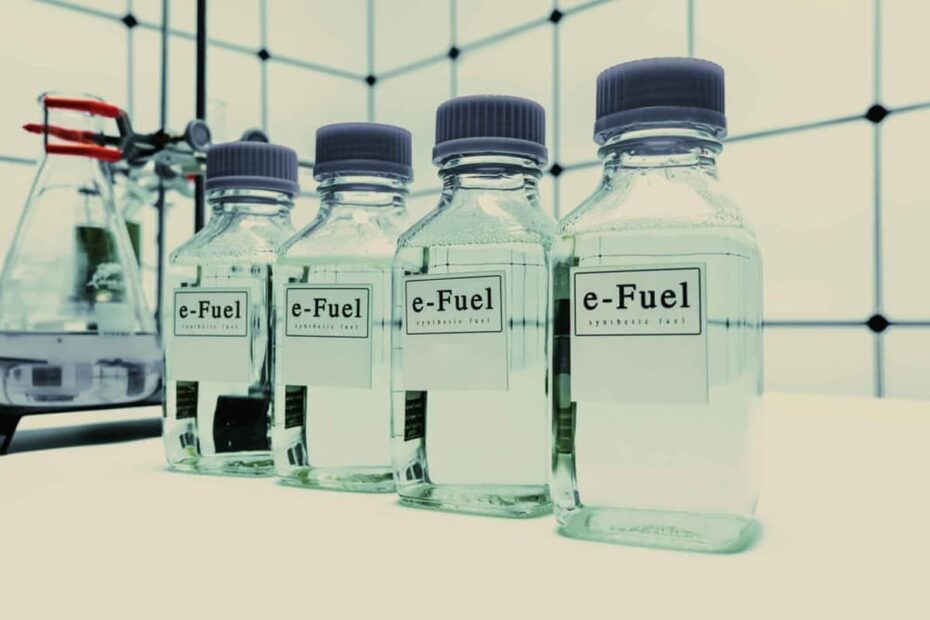
German climate-tech startup Greenlyte Carbon Technologies is using solar energy to power its new plant that produces synthetic fuels from captured carbon dioxide and green hydrogen.
The LiquidSolar SNG plant in Duisburg will capture up to 40 tonnes of carbon dioxide and deliver five tonnes of e-methane each year.
The technology works by pulling CO2 from the air and binding it into a bicarbonate solution using a liquid sorbent.
This bicarbonate is then fed into an alkaline electrolysis unit, where the applied current releases the CO2 and simultaneously produces green hydrogen. With both molecules generated on site, the plant can combine the captured CO2 and the hydrogen to create e-methane.
This can be turned into a variety of chemicals and fuels such as e-methanol and sustainable aviation fuel, also called e-SAF.
The entire CO2 capture process is powered by solar energy and, according to the company, is cost-competitive with fossil energy.
“Our system is technically advanced [and] economically attractive for customers,” said Florian Hildebrand, CEO and co-founder of Greenlyte.

Greenlyte won public funding earlier this year to conduct a pre-study on integrating its tech with methanol synthesis. ©Greenly
According to Greenlyte, its tech has undergone 13,000 operating hours in pilot projects and is “ready for the market.”
The project also fits with the climate targets of North Rhine-Westphalia, where the plant will be based. NRW is Germany’s industrial heartland and has positioned itself as a testbed for hydrogen, e-fuels, and carbon-to-chemicals projects.
NRW is already home to major decarbonisation projects including the GET H2 hydrogen backbone, Thyssenkrupp Steel’s hydrogen-ready furnaces in Duisburg, and RWE’s scaling plans for green hydrogen production along the Rhine.
Hendrik Wust, Minister President of NRW, said the area aims to become Europe’s first climate-neutral industrial region.
“With the world’s first integrated DAC-to-SNG plant in Duisburg, harmful greenhouse gas is turned into a valuable resource,” he added. “This is future technology [that reduces] energy-sector dependencies.”
The firm hopes to open a scaled up plant producing e-methanol and then enter international markets by 2030. It has so far secured long-term offtake agreements with companies such as Eurowings and MB Energy.
Demand for e-methanol is set to rise as shipping decarbonisation policies tighten, offering a potential market for the company’s next phase.