
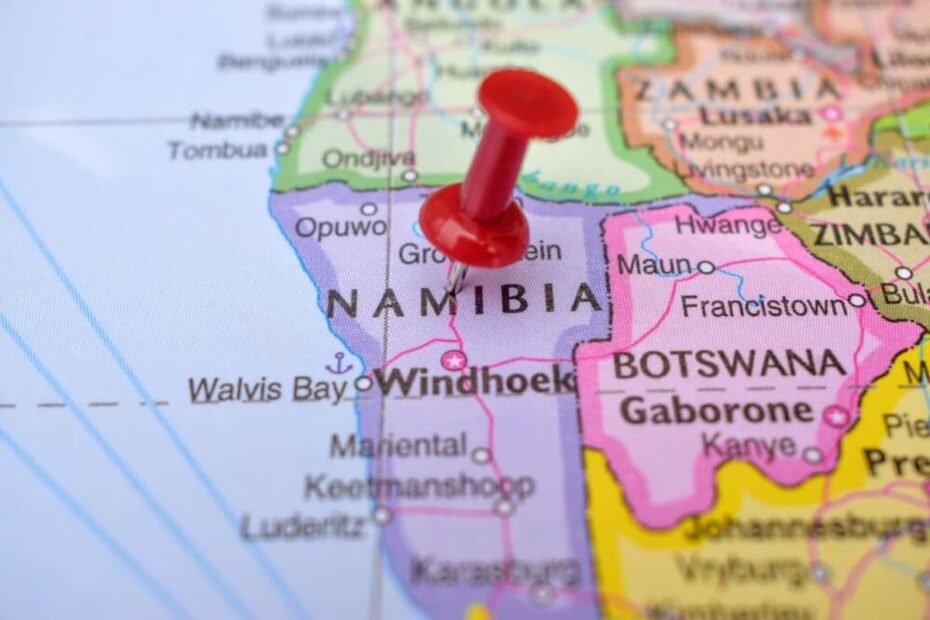
Namibia is moving forward with plans to establish itself as a green hydrogen trading centre and export hub.
The official opening of Cleanergy Solutions Namibia’s green hydrogen production and refuelling facility in Walvis Bay was recently presided over by Prime Minister Dr Tjitunga Elijah Ngurare.
Billed as the first integrated green hydrogen plant in Africa, the site brings together solar-powered electrolysis, a hydrogen refuelling station, and a dedicated Hydrogen Academy, combining production, distribution, end-use and training in one location.
Hydrogen produced at the plant is already being used in dual-fuel trucks, off-road tractors and monofuel hydrogen gensets for off-grid power generation. A mobile refueller operating at 500 bar will also support flexible distribution across Namibia.
Developed in partnership with Belgium’s CMB.Tech and the Ohlthaver & List Group, the project has received backing from Germany’s federal ministry of research, technology and space, alongside training and research support from European institutions.
And a week earlier, the Prime Minister was again on officiating duties as he took a ride on the country’s first green hydrogen-powered bus, whose slogan declares ‘this bus runs on hydrogen from Namibian sun’.
And now, in the biggest move to date, environmental clearance has been given to develop a 3GW hydrogen and ammonia facility at Walvis Bay, spanning 5,300 hectares. One site will host electrolysers, desalination and ammonia synthesis facilities, while another will serve as a hub for ammonia storage and export.
However, as with other locations, Namibia is finding that hydrogen isn’t without its challenges.
In the biggest blow, German utility RWE has pulled out of the flagship $10bn Hyphen green hydrogen project, citing slower than expected demand in Europe for hydrogen and derivatives such as ammonia, according to reports. The implications for its export model are severe.
RWE and Hyphen Hydrogen Energy (Hyphen) had signed a memorandum of understanding in December 2022, that could have seen RWE offtake up to 300,000 tonnes of green ammonia per year from Namibia.
Overall sentiments remain positive. Global consultancy McKinsey forecasts that Namibia could be producing green hydrogen at $1.50/kg by 2030, adding as much as $6bn to its GDP, and the southern African country is targeting 10 to 12 million tonnes hydrogen production by 2050.
But to achieve its aims, investment of up to $190bn will be needed, encompassing infrastructure, technology and pipelines.
In April, the HyIron Oshivela plant opened, one of the world’s first industrial facilities dedicated to producing green iron with zero emissions, which incorporates solar, batteries and direct reduced iron hydrogen.