
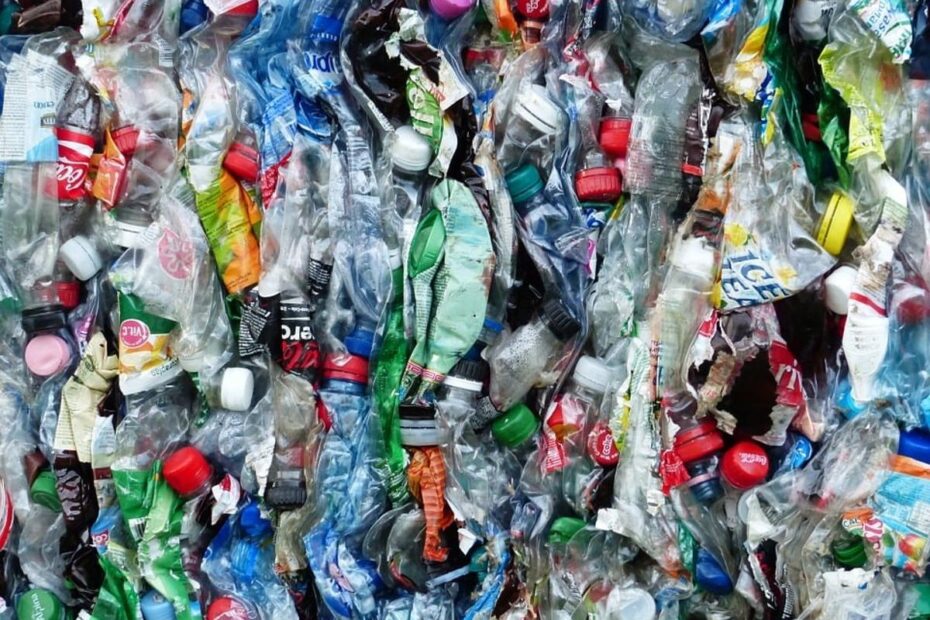
The latent potential of unrecyclable plastic waste to be put to better value-added uses has not be unlocked yet, but the potential is there.
The message comes from Ed VanDyne, CEO of US startup Plastic to Green, which has a proposition to use plasma-based technologies, using ionised gas, to convert all types of waste plastic into three key materials of real value: green ammonia, carbon black, and nitrogen-doped graphene.
What’s striking about this is the intrinsic value of these outputs, which make the economics of the whole venture look very strong on paper.
“Nitrogen-doped graphene is valued at about $2000 per gram today, with many essential uses in markets that are growing fast,” said VanDyne. “Carbon black, similarly, is a fine black powder made from elemental carbon and it has a growing list of valuable uses as a reinforcing agent. Green ammonia, of course, is a growing opportunity in energy if the price is right, and we have calculated that our production method will deliver it for about a third of the cost of green ammonia derived from water, once we have a full-scale facility.”
VanDyne’s sums will need to be proven but are likely to have investors taking notice. P2G currently looking to raise an initial $1m to help prove its technology further. It is more than halfway there currently.
“We started from the point that waste plastic is a huge problem but also a potentially abundant resource. Plastics production has increased 20-fold over the past half a century, and its production is still increasing.”
P2G has calculated that even if it built out 1,700 full-scale plants as it envisages them, processing 600 tonnes a day each, that would only address a quarter of the plastics being produced – so as a feedstock it could hardly be more abundant and available.
The process converts shredded plastic to plastic gas in an arc furnace and applies a plasma torch to the gas mix, followed by various gas separation steps to arrive at carbon black as a solid powder output, from which the nitrogen-doped graphene can also be produced, plus a range of gases including hydrogen, out of which liquid ammonia can be synthesised.
“That’s the short version, of course, said VanDyne. “But we are confident we can prove every part of the process, and soon at scale.”
Right now the company is building out a mobile lab to prove much of the process in a single location.
“As we put it all together, we aim to fit much of it into a single trailer-sized space that can deliver plastics to ammonia, plus the high value carbon outputs. That’s crucial because investors understandably will want to see the physical plant processes in action to be confident.”
The process, said VanDyne, is in some ways similar to methane pyrolysis, but with some novel twists. It results in 70% of the outputs by mass being the carbon black, with 10% being carbon dioxide and 14% being hydrogen, which is flowed into a standard ammonia synthesis loop.
“One of the beauties of our model is that is uses a lot of standard and available equipment from established suppliers, so the challenge of scaling should be fine. In fact, building out at scale will be easier in many ways, as you can source the technology. The ammonia tech, for example, is available as a standard 300 tonnes a day loop: that’s the smallest you can buy and will suit our needs.”
Read the full interview in the nest issue of gasworld Global edition, out on 1 October.